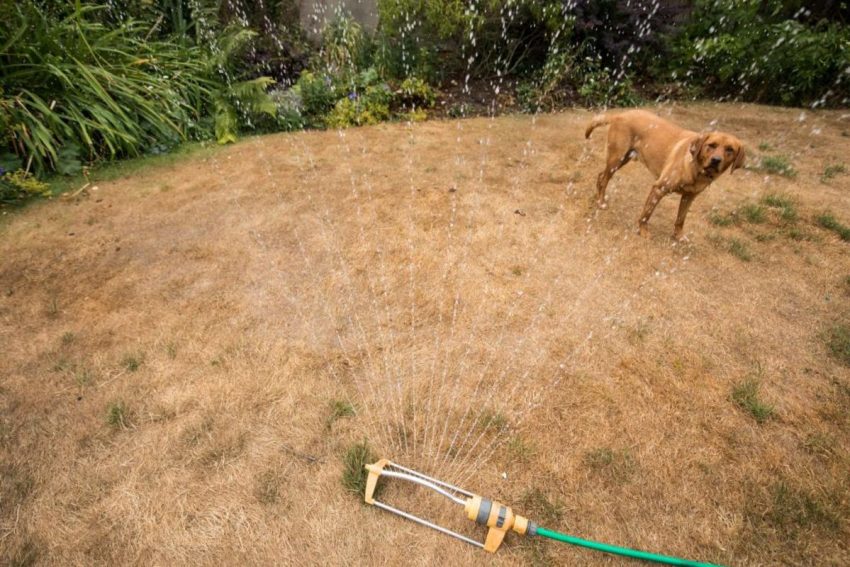
Like many parts of the country, we’re suffering through a dry summer. Heat’s always a factor, but the watering restrictions are making it difficult.
There’s a Certain Temperature When Your Lawn Starts to Die…Slowly
The folks at Lawnlove.com are experts in providing tips and information, and providing people with a resource to find lawncare companies.

They say the drought being felt, or at least dry conditions and heat in many parts of the country are hurting lawns noticeably.
What are the Signs of a Seriously Distressed Yard?
We usually think brown or yellowish grass means it’s in trouble, but actually Lawnlove says the worst sign of a dying yard is dull bluish-green grass. And, grass that doesn’t ‘bounce back’ or straighten back upward after you walk on it. It stays ‘flat’.
Raising your mower height in summer can help too. Even just a half inch taller can keep the grass healthier. Mowing too low, ‘scalping’ the lawn, can contribute to burning and dying faster. Raise both the front and back adjustments, adjusting one without the other can still result in some scalping at an angle.
They also say the best times, on average, to water, are between 5-9 and AM. That’s why a lot of automatic systems run early. It allows water to soak in, without remaining ‘too wet’ when the sun comes up full strength.
And Finally, What’s the Temperature Where Lawns Start Dying?
Beside heat, humidity and a number of regional climate factors can affect grass differently. But in general, grass begins to show significant stress and slowly die (if left uncared for) when temperatures hit 90 degrees or higher.
Lawnlove also has tips on how to maintain your yard in dry or drought conditions.
LOOK: The most extreme temperatures in the history of every state
Keep reading to find out individual state records in alphabetical order.
Gallery Credit: Anuradha Varanasi