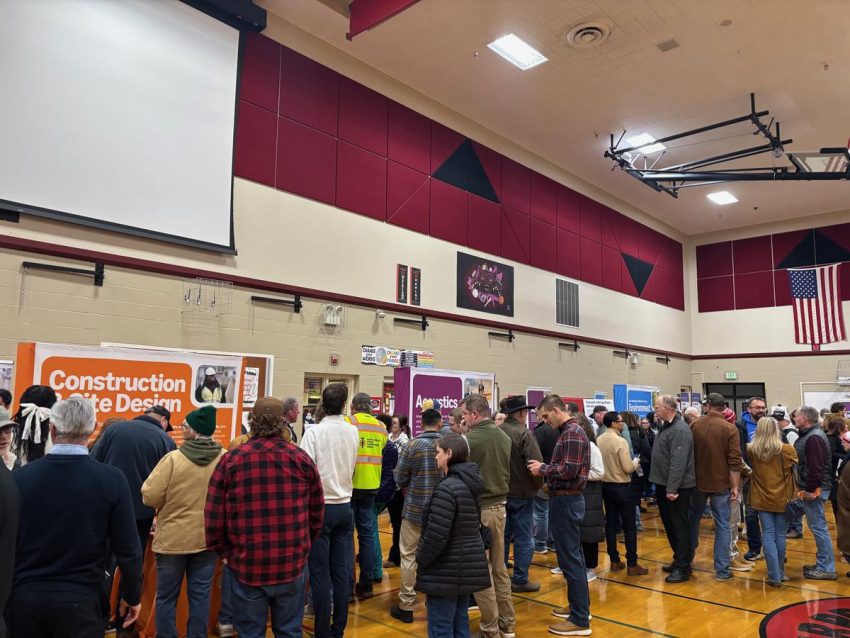
I spent last night talking with city officials and representatives at information tables about the proposed Amazon data center development in West Richland.
There was plenty of information available, but I walked away with three big questions that I don’t believe were fully answered.
Question No. 1: Is This Really Just a Proposal?
They involve the project’s status, water quality, and electricity costs. And one question may be bigger than the other two: Is this project really still just a proposal?
I had an opportunity to interview West Richland Community and Economic Development Director Eric Mendenhall. During our conversation, he described the likelihood of the project moving forward as approximately 99%. He essentially indicated that Amazon was the only party that could walk away and prevent the facilities from being built.
That’s an interesting contrast to the way the project is still being presented publicly.
To be fair, the city has said no formal development application has been submitted, and the project has not received final approval.
A private developer has purchased the property, and Amazon has confirmed it is behind the proposed campus, which could eventually include as many as 21 buildings.
So, legally, there are still steps to complete. But if a city official believes the project is virtually certain to happen, residents deserve to understand what’s already been decided, what remains open to discussion, and how much influence the community still has.
Question No. 2: What Happens to the Water After It’s Used?
One of my biggest concerns involves the water used to cool the data center.
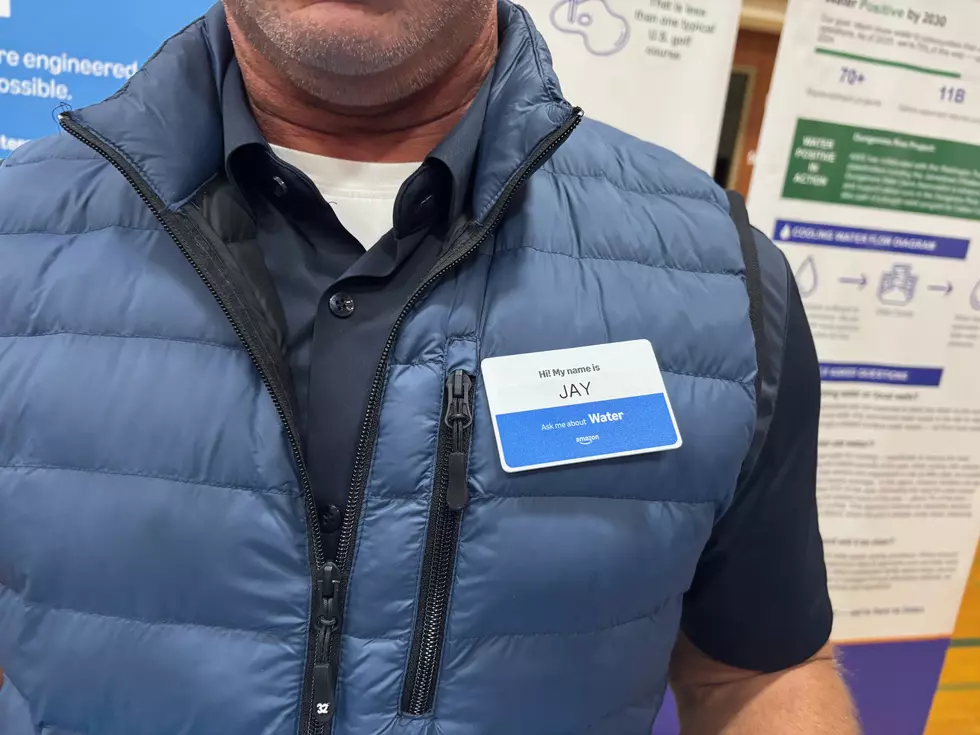
I spoke with an Amazon representative named Jay, who told me the facility would use evaporative cooling rather than a closed-loop cooling system.
That distinction matters.
Data centers generate enormous amounts of heat, and that heat has to be removed to keep the equipment operating. With evaporative cooling, water helps carry away that heat. Some of the water evaporates into the air, while the remaining water continues circulating through the cooling equipment.
Here’s the catch: Dissolved minerals and salts don’t evaporate along with the water. They remain behind, becoming more concentrated as the water cycles through the system.
Eventually, some of that concentrated water, known as cooling-tower blowdown, must be removed and replaced with fresh water.
Depending on the source water and the chemicals used to maintain the cooling system, that wastewater can contain concentrated minerals and other substances that require proper handling and treatment.
This isn’t just a theoretical concern.
In eastern Oregon, Amazon agreed to a $20.5 million settlement involving allegations that its data-center operations contributed to nitrate contamination in groundwater in Morrow and Umatilla counties.
The case involved a larger wastewater disposal system and multiple businesses. Amazon denied wrongdoing, and the settlement did not establish that Amazon caused the underlying contamination.
That doesn’t mean the same thing will happen in West Richland. But it certainly makes the questions worth asking.
Where will the wastewater go? How much will be produced? What chemicals will be used? And will residents have access to regular testing results showing exactly what is being discharged?
Jay didn’t have answers to those questions.
West Richland adopted interim data-center standards on November 3 that address water consumption, cooling-tower blowdown, wastewater discharge limits, sampling, and reporting. Those rules provide a framework for protecting the community, but the actual details of this project’s water use and wastewater disposal still need to be established.
Knowing the facility will use evaporative cooling is one thing. Knowing what’s in the wastewater and exactly how it will be handled is another.
Question No. 3: Where Will All the Electricity Come From?
The electricity question may be just as important, especially when it comes to what the project could mean for regional power supplies and electricity costs.
During conversations with several people, including an Amazon representative, I tried to get a clearer picture of the electrical demand and where that electricity would come from.
The discussion kept coming back to the small modular nuclear reactors planned through the partnership between Energy Northwest, X-energy and Amazon.
The proposed Cascade Advanced Energy Facility initially calls for four reactors capable of producing 320 megawatts. The project could eventually expand to 12 reactors producing a total of 960 megawatts.
Those reactors are an interesting part of the region’s energy future. But they aren’t producing electricity today.
The proposed Cascade Advanced Energy Facility would use a newer type of small modular nuclear reactor developed by X-energy. The technology is still moving toward its first commercial deployment. No Xe-100 reactor has been built and put into commercial operation yet.
That makes the proposed facility an important test of a technology that could eventually provide substantial electricity to the region. But it is not an existing power source, and there are still major steps ahead before it can begin generating electricity.
Construction and licensing are still ahead, with commercial operation targeted for the early 2030s.
So I kept coming back to a simple question:
What happens between now and then?
Data centers need electricity from the moment they begin operating. They can’t wait for future nuclear technology to come online.
Where will the electricity come from in the meantime? How much will the facility need to purchase from the existing power grid? And could those purchases affect the cost of electricity for other customers?
Those are questions residents deserve to have answered before the project moves much further forward.
Tri-Cities Power Supply is Complicated to Understand
This is where Bonneville Power Administration, or BPA, enters the conversation.
BPA supplies wholesale electricity to public utilities throughout the Northwest. Much of its power comes from federal hydroelectric dams, but when available resources aren’t enough to meet demand, BPA can purchase electricity from other sources.
Those purchases can cost more and can affect wholesale power costs for the utilities and customers that depend on BPA.
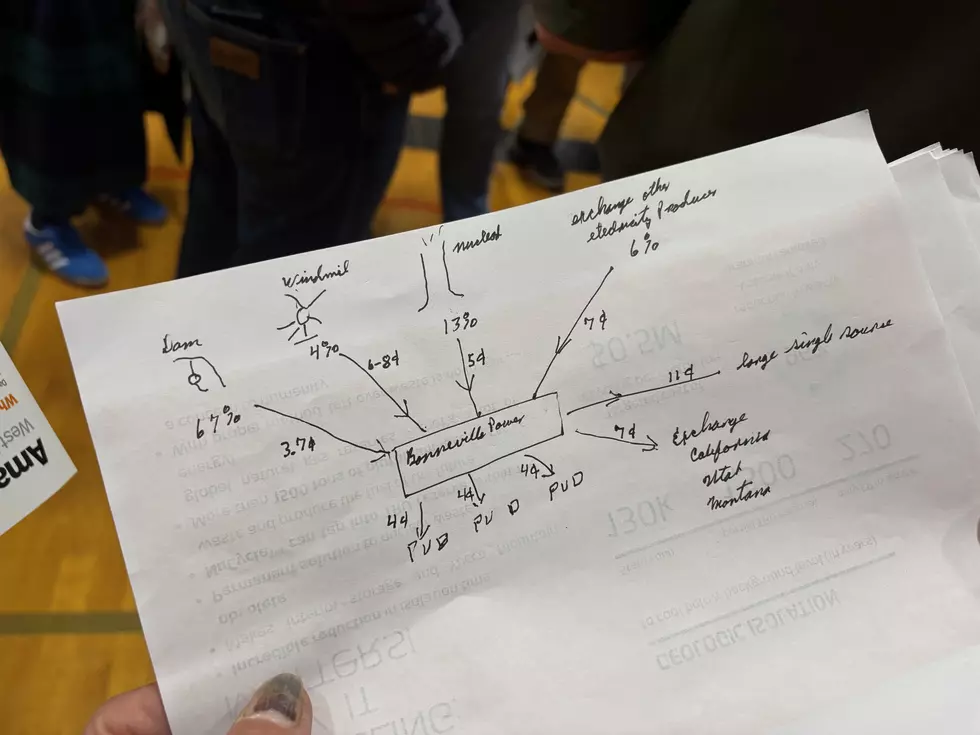
A few of us were asking questions to another Amazon rep when I started a conversation with a West Richland resident named Boyd, who had researched BPA’s power purchases and put together graphs comparing different electricity costs.
He raised concerns about the difference between lower-cost power and more expensive purchases when demand exceeds available supply.
Some of the figures he shared were approximately 5 cents per kilowatt-hour for lower-cost power and 7.5 cents for more expensive purchases. That’s a 50% increase.
BPA’s published rate schedule does show different pricing categories, including an exchange rate of approximately 7.6 cents per kilowatt-hour and a New Resource Firm rate of approximately 11.1 cents.
Those figures are not necessarily direct comparisons of BPA’s generation costs and market purchases, but they illustrate why the source and cost of additional electricity matter.
The concern isn’t simply that Amazon will use a lot of power. It’s whether the additional demand will affect the cost and availability of electricity for existing customers in our area.
Amazon has discussed its power arrangements with Energy Northwest, but residents still need a clear explanation of how the data center will be powered before the proposed nuclear reactors are operating.
Who supplies the electricity in the meantime? What transmission upgrades are needed? Who pays for those upgrades? And what protections are in place to prevent existing utility customers from absorbing additional costs?
Those are questions that deserve specific answers, not just assurances that future nuclear power decades away will help meet demand.
Finalized or Not?
The city continues to describe the Amazon development as a proposal. Technically, that is accurate because the formal development and permitting process has not been completed.
But describing something as a proposal can leave residents with the impression that the project is still very much up in the air.
My conversation with the city’s Community and Economic Development Director suggested something different. His estimate that the project was 99% likely to happen raises an important question about how much uncertainty actually remains.
If Amazon is the only party that can walk away, what decisions are still being made by the city?
Can the city still require changes to the development? Can it impose additional conditions on water use, wastewater treatment, electricity infrastructure, and other impacts? And how much influence will residents have before the project moves forward? Who is responsible if things go bad?
Those aren’t unreasonable questions when a development could eventually include 21 data-center buildings.
Residents Deserve More Than General Assurances
I came away from the information event with questions that deserve more attention.
The water issue isn’t simply whether evaporative cooling works. It’s what happens to the water quality afterward that is left over.
The electricity issue isn’t simply whether small modular reactors may eventually provide power. It’s where the electricity comes from in the years before those reactors are operating and who pays for it.
And the development issue isn’t simply whether Amazon has filed its permits. It’s how close this project really is to becoming a reality and what opportunities remain for public input.
West Richland, and all Tri-Cities residents, honestly, deserve clear, specific answers before this project moves any further, but I fear that is not going to happen.
A development of this size will have a lasting impact on the community, and the public “should” understand the costs, the infrastructure requirements, and the potential environmental effects before decisions are finalized.
Read More: That’s Not Tint! Washington State Trooper Tickets Soot-Covered VW
Read More: Car Cuddle? Rear-End Romance on I-5 Leaves Drivers Unhappy
Seattle Seahawks Super-Fans at Lumen Field
Gallery Credit: Aj Brewster