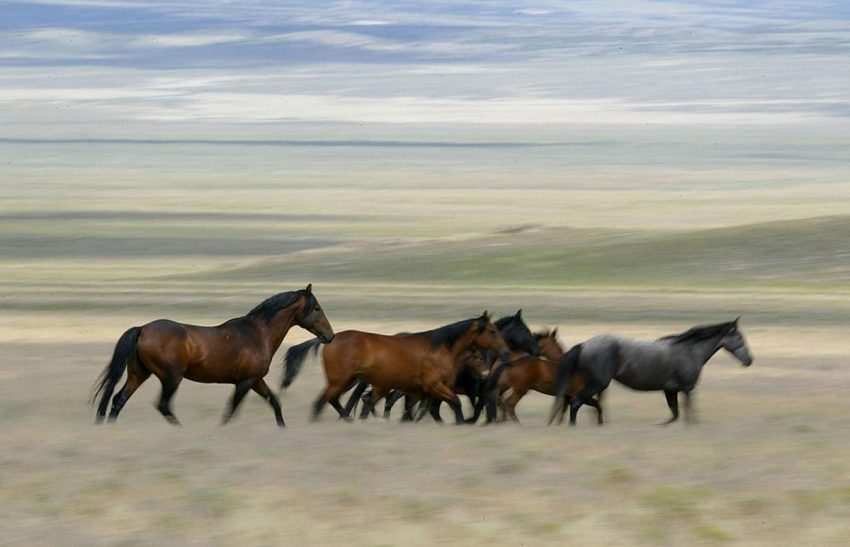
The US Department of the Interior and Bureau of Land Management announced Wednesday, the launching of an extensive effort to help some 1,200 wild horses survive the extreme drought conditions.
Officials Plan to Move a Number of Horses from Southeast Oregon
The Sheepshead/Heath Creek Herd Management Area is located in Oregon, northwest of Burns Junction, bordered by Highway 78 and the Steens Mountain Rim. It covers about 200,000 acres, and is home to between 500 and 900 horses annually.
The fascinating history of these horses comes from descendants of former US Army horses, as well as ancestors of horses who escaped from ranches and farms over, reaching back multiple decades.
The Drought Has Affected the Health of the Population
Due to ongoing dry conditions or drought in other regions, the population in this preserve has swelled to at least 1,200 animals, too much for the dry topography to support. So, BLM and other agencies plan to round up and transport about 500 of the horses to offsite holding facilities. There, the horses will be given vet examinations, food, and continuous access to fresh water.
It’s believed most of them will be animals who exhibit the most unhealthy conditions.
BLM says the move is a necessary to help preserve the overall health of the groups. According to BLM:
“Removing these horses from the range will support rangeland health and help the land recover from the recent wildfire, ensuring these areas can continue to provide habitat for wildlife and support multiple land uses. Through collaborative efforts, the program seeks to protect the welfare of wild horses and burros while preserving rangeland ecosystems for future generations.”
LOOK: Stunning animal photos from around the world
From grazing Tibetan antelope to migrating monarch butterflies, these 50 photos of wildlife around the world capture the staggering grace of the animal kingdom. The forthcoming gallery runs sequentially from air to land to water, and focuses on birds, land mammals, aquatic life, and insects as they work in pairs or groups, or sometimes all on their own.
Gallery Credit: Nicole Caldwell