If you have noticed a recent explosion in the number of Washington fires this past decade, you are not alone. The constant smoke and prolonged stretches of unhealthy air quality made me inquire into the statistics and what we can do to solve this lingering problem.
Wildfire Frequency Over the Years
In the 1990s, an average of 86,000 acres of land burned per year in Washington State. In the last 5 years, that number has increased about five-fold to 488,000 acres per year. A notable turning point came with the 2014 Carlton Complex Fire, which destroyed 256,108 acres, followed by the 2015 Okanogan Fire, which destroyed a sobering 522,000 acres! By 2017, it became expected in Central Washington to have weeks of thick smoke cover caused by these megablazes. What gives?
Forest Management Policies Have Changed Over the Years
To answer this question, we have to go back to 1910, when a massive wildfire scorched 3 million acres in the Rockies and killed 78 people. The U.S. Forest Service came up with the “10 AM” policy, which meant all forest fires had to be put out before 10 AM the day after they were reported.
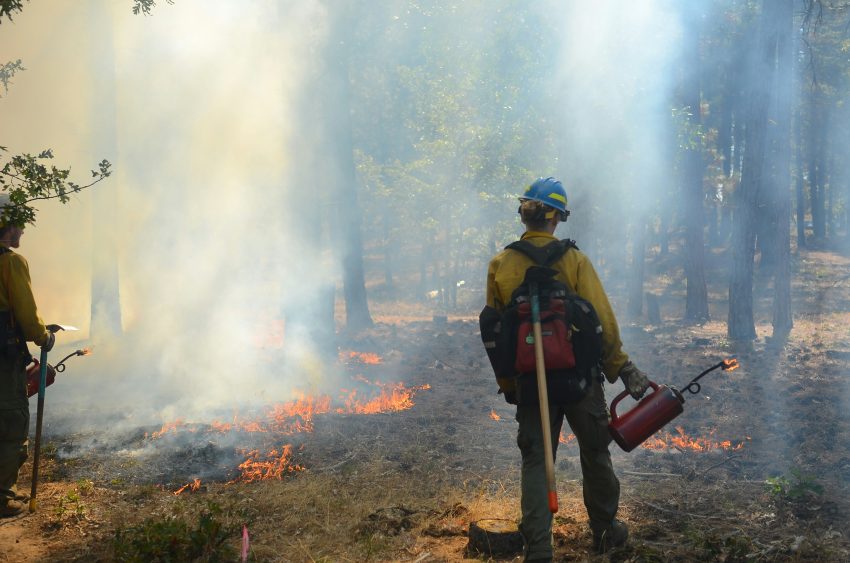
Controlled burns were also discouraged due to high costs and economic loss in the timber industry, among other things. However, for thousands of years prior, small acreage fires had helped clear out major fire catalysts such as dead pine needles, fallen branches, dry leaves, and thick brush.
The lack of management of our forests during most of the 20th century led to decades of uncontrolled growth of underbrush and small trees that allow ground fires to reach treetops. This growth has exacerbated small fires into unstoppable conflagrations.
The State of Washington finally reversed its policy in 2017 with its 20-Year Forest Health Strategic Plan to clear out areas of 1.25 million acres of vulnerable, overstocked forests by 2037. So far, the state has cleared about 35% of its targeted small trees and 17% of targeted underbrush.
While the State of Washington is making some progress, it will not be enough to stop mass wildfires in the next few years.
Mt. St. Helens Blows it’s top
Gallery Credit: Lance Tormey