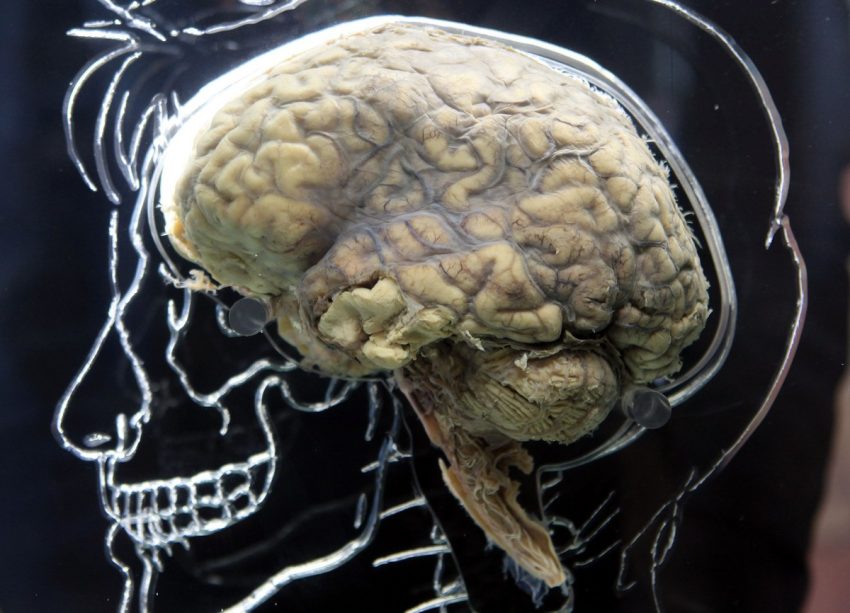
Lots of things happen to your body as you get older. Your metabolism begins to slow down; things that you used to be able to eat with impunity now don’t like you anymore. Your body actually begins to compress, you’re not as tall as you used to be.
And your brain begins to shrink. Yes, it starts to shrink, not a pretty picture. When I think about it, I imagine my brain inside my giant skull, just kind of rattling around in there with a lot of open space.
It’s pretty safe to say that when your brain starts to shrink, it’s not a good thing, but it is inevitable. However, there are ways to slow down the shrinkage of your brain and extend brain health.
Why does your brain shrink?
The process begins when you’re in your 30s and 40s and begins to accelerate once you hit your 70s. (Uh oh.) And it’s caused in part by, yes, you guessed it, shrinking brain cells and the loss of connectivity between those brain cells. Experts say that this shrinkage normally happens in the frontal Cortex and the hippocampus. Areas of the brain that are critical for memory and high-level thinking.
Is this decline a foregone conclusion?
According to seattletimes.com,
‘But this decline does not have to be inevitable, said Majid Fotuhi, a neurologist and author of the new book “The Invincible Brain: The Clinically Proven Plan to Age-Proof Your Brain and Stay Sharp for Life.”
Fotuhi, an adjunct professor at Johns Hopkins and an expert on neuroplasticity, has published studies showing that you can slow brain atrophy or even increase the size of your hippocampus and frontal cortex with the right lifestyle behaviors.
Fotuhi says that there are at least 6 things you can do to extend your cognitive lifespan.
Find a purpose in life.
Studies are showing that feeling that you have a purpose in life can be associated with better brain health and a larger hippocampus. (I’ve always wanted a larger hippocampus.) Nobody can actually point out the reason why this happens.
Meditate.
This is not something that the average American does on a regular basis, I sure know that I don’t. However, it is beneficial. It helps to lower cortisol, which is a stress hormone. When that hormone is elevated, it is not good for your brain. Other studies indicate that it increases blood flow in your brain, (That’s a good thing) and it strengthens connections between neurons.
Get enough sleep.
In the clearest possible terms, if you’re not sleeping well, you’re hurting your brain. Getting a good night’s sleep helps to clear “metabolic waste” from your brain.
Challenge your brain.
This is actually one that I know about. Every time you learn something new, you strengthen Your cognitive longevity. Developing new skills, learning new information creates new synapses in your brain. Which, by the way also makes your brain a little bigger every time.
Exercise.
Yes, physical exercise is good for your brain. Any kind of aerobic exercise, like walking for instance, will benefit your brain, specifically the hippocampus and the prefrontal cortex. Exercising helps to create a protein called BDNF that helps promote the growth of neurons.
Change your diet.
Think about what is referred to as a Mediterranean diet. Seafood, beans, whole grains, fruits, vegetables, nuts, and olive oil, all these foods contain essential nutrients that are healthy for you brain
This is not an easy process.
For the average American, (that’s me) following these 6 rules could be extremely difficult, but necessary if you want to increase cognitive Longevity.
I would like to have my brain properly functioning as long as possible. All I have to do is look at my older brother and ask myself “Is this where I want to wind up in six years?”
The answer is no. So, I need to get busy.
The 10 Absolute Best Things About Getting Older