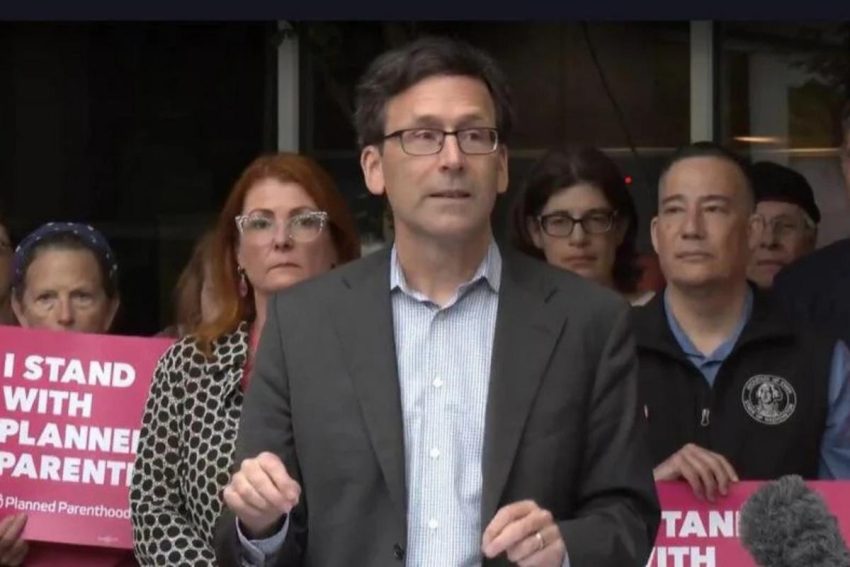
(The Center Square) – Two weeks after Governor Bob Ferguson signed the supplemental operating budget, questions remain as to why he vetoed funding in the spending package to combat organized retail theft.
Organized retail theft involves coordinated, often violent, theft for resale and not just petty shoplifting.
The veto amounted to axing $500,000 in a funding request brought by state Rep. Mari Leavitt, D-University Place, to address costly and dangerous retail crime across the state.
The half a million was intended to piggyback on a $1 million investment in 2024 to help law enforcement, prosecutors and businesses to combat organized retail crime in King, Snohomish and Spokane counties.
More cases were prosecuted and eligible offenders were steered to diversion programs until the funding ran out in June of 2025.
A January report issued by the state Department of Commerce indicated the program “was highly effective in strengthening the overall response” to organized retail crime.
Leavitt said she was shocked to find out the new funding to continue the program was being cut, via a phone call from the governor’s office the night before the budget was to be signed.
“When I got off the phone, I quickly called the retail association and those who matter and said the governor’s going to veto it tomorrow, we need to galvanize an effort to stop it,” Leavitt said.
The Washington Retail Association, the King County prosecutor and others responded, urging Ferguson not to veto what amounted to a tiny fraction of the budget. But their pleas didn’t stop Ferguson from vetoing the budget line.
Pressed by reporters about the veto, Ferguson said that as attorney general he created a task force to tackle the issue of retail theft, but added, “at the same time, we’ve got a budget to balance.”
During Ferguson’s time as AG, the office did create a special unit that targets high-dollar organized crime.
Leavitt said she has not had a personal conversation with the governor since the veto, but she’s not giving up the battle.
“It’s very clear that many people are unsatisfied with the decision that the governor made, and the governor made it anyway,” Leavitt said. “This is a bipartisan concern across our state. It has nothing to do with politics but has everything to do with keeping our communities safe.”
Leavitt said she is considering an effort to convince other lawmakers to override the veto come next legislative session, but regrets there is nothing more that will be done for the remainder of this year.
Crystal Leatherman, director of policy and government affairs for the Washington Retail Association told The Center Square retailers are extremely frustrated by the revolving door of repeat offenders.
“We unfortunately have an environment that feels very permissive with individuals offered diversion in lieu of jail time, but then they are not required to go and there’s no enforcement mechanism for them to finish these programs.” Leatherman said. “So, they’re getting a free ride.”
She noted that their members and employees are put at risk every day because of organized retail theft operators.
“Unfortunately, Washington is one of the leading, if not the leading state for businesses being impacted by retail theft,” she said. “The National Retail Federation’s most recent report had Seattle in the top ten for cities with violence increasing with retail theft, so this is impacting workers too.”
According to the NRF’s 2025 Impact of Retail Theft & Violence report, retailers nationwide lost more than $112 billion to theft and organized retail crime last year, and saw a sharp increase in repeat-offenders and violence during thefts.
The US Chamber of Commerce estimates that in 2021, Washington experienced an estimated $2.7 billion in stolen goods and as a result, lost out on $603 million in state and local tax revenue.
The Center Square reached out to the office of Gov. Ferguson for comment on his veto decision but did not receive a response.